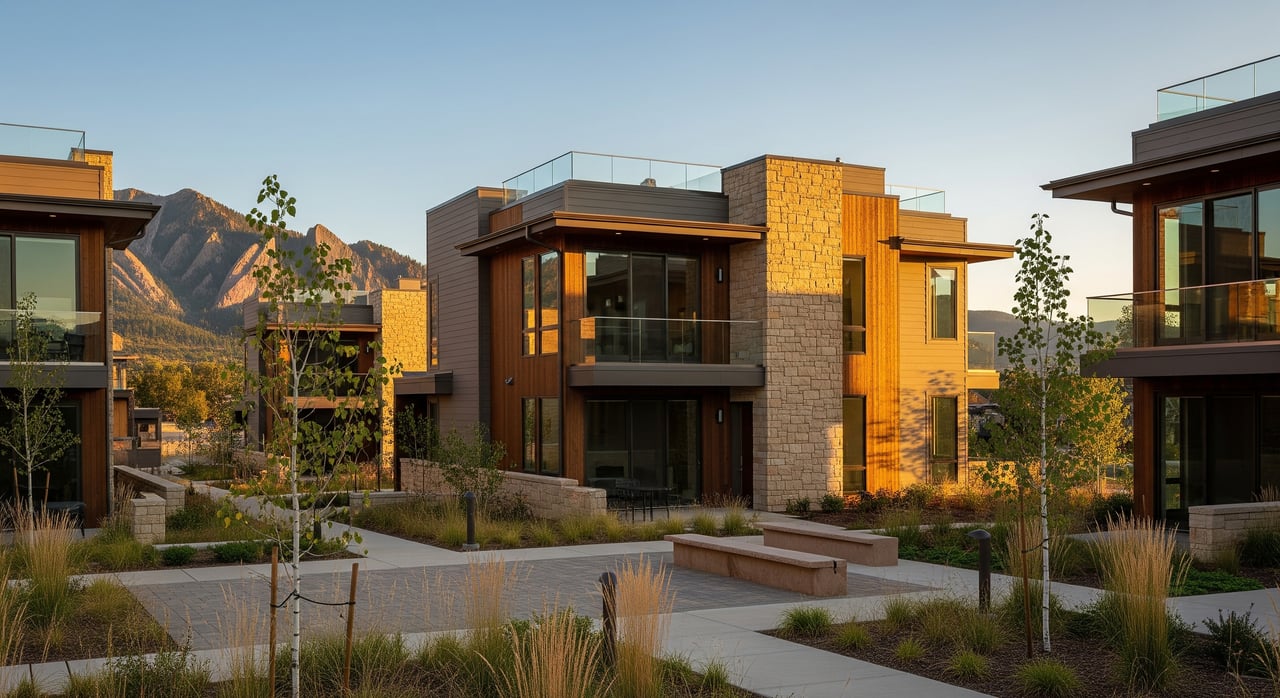
Is an HOA townhome in Gunbarrel a smart investment, or a surprise waiting to happen? When HOA budgets are tight, a single special assessment can erase a year of cash flow. You want predictable numbers, clear rules, and a board that plans ahead. In this guide, you’ll learn how to pull the right documents, run simple calculations, spot red flags, and make a confident offer in Gunbarrel. Let’s dive in.
Why HOA analysis matters in Gunbarrel
Gunbarrel sits in unincorporated Boulder County, so county land use and permitting rules apply rather than City of Boulder ordinances. Before you underwrite rent or plan improvements, verify local rules and licensing with Boulder County Land Use and Planning.
Natural hazards can affect insurance costs and assessment risk. Check a property’s placement on the FEMA Flood Map Service Center and review wildfire guidance from the Colorado State Forest Service. These risks can push deductibles higher or trigger special assessments after losses.
Colorado’s HOA law, the Colorado Common Interest Ownership Act (CCIOA), sets rules for governance, disclosures, and collection of assessments. If you need to cite the statute or confirm a right, use the official text of the Colorado Common Interest Ownership Act (C.R.S. 38-33.3).
What to request from the HOA
Collect a complete packet before you commit. Missing pieces often hide risk.
Core governance and legal
- Declaration (CC&Rs), bylaws, articles, rules and regulations.
- Resale certificate and amendments.
- Recorded plats and unit descriptions.
Financials and assessments
- Current and prior-year operating budgets.
- Balance sheet and income statements for the last 2–3 years.
- Current reserve fund balance and reserve ledger.
- Most recent reserve study with recommended funding plan.
- History of special assessments over the last 5–10 years.
- Current dues schedule and any approved or proposed increases.
- Accounts receivable report showing delinquent assessments.
Operations and risk
- Board and annual meeting minutes for the last 12–36 months.
- Contracts for major vendors and any capital project bids.
- Association insurance declarations, including deductibles and covered perils.
- Litigation history or pending claims.
- Building inspection reports and any code or safety violations.
- If available, an aggregated count of owner‑occupied vs. rented units.
Pro tip: Ask management for a short written summary of upcoming projects, the board’s reserve funding plan, and how large projects will be financed.
How to run the numbers
Reserve strength and percent funded
Reserves pay for big-ticket items like roofs, siding, paving, decks, and boilers. A professional reserve study inventories components, estimates remaining life, and recommends a funding path. For background and best practices, review CAI’s guidance on reserve studies and funding.
Two quick checks matter:
- Reserve per unit shows cash readiness at a glance.
- Percent funded compares current reserves to the fully funded target. Lower funding often means higher assessment risk.
Key metrics to calculate
Use these to compare communities and price risk into your offer:
- Reserve balance per unit = total reserves ÷ number of units.
- Percent funded = reserves ÷ reserve study’s fully funded target.
- Operating cash ratio = operating cash ÷ monthly operating expenses.
- Delinquency rate = assessments receivable ÷ annual assessment revenue.
- Assessment history = frequency and average amount per special assessment.
- Estimated per‑unit assessment for known projects = shortfall ÷ number of units.
A percent funded below roughly 30 percent increases the chance of special assessments or sharp dues hikes. Delinquency above 5–10 percent raises collection and cash flow risk.
A simple worksheet you can reuse
Gather:
- Units (N), monthly dues per unit (D), reserves (R), fully funded target (T).
- Annual operating budget, operating cash balance, and delinquencies.
- Known project costs, timeline, and any planned financing.
- Master policy deductible.
Compute:
- Reserve per unit = R ÷ N.
- Percent funded = R ÷ T.
- Operating cash months = operating cash ÷ (operating budget ÷ 12).
- Delinquency rate = delinquencies ÷ (D × 12 × N).
- If a project exceeds cash on hand, estimate the per‑unit assessment = shortfall ÷ N.
Illustrative example only:
- N = 80; D = $350; R = $120,000; T = $400,000; roof project = $600,000.
- Reserve per unit = $1,500; percent funded = 30 percent.
- Shortfall for roof after reserves = $480,000; estimated assessment per unit = $6,000 if no loan is used.
Assess special assessment risk
Look at the reserve study’s near-term replacements and compare them to reserves and operating cash. If the master insurance deductible is high relative to reserves, a single claim could require a pass‑through assessment to owners. Review meeting minutes to confirm how the board plans to handle funding, whether through a special assessment, increased dues, or a loan.
Under CCIOA, associations can place liens and use statutory remedies for unpaid assessments. If a seller is delinquent, confirm how the HOA handles collections and whether any prior assessments must be cured at closing. The state’s HOA Information and Resource Center is a useful starting point for consumer guidance at the Colorado Division of Real Estate’s HOA Center.
Rental and legal constraints to verify
Your leasing plan must fit both the county and the HOA. Because Gunbarrel is unincorporated, check Boulder County’s rules on any licensing or short‑term rental limits through Boulder County Land Use and Planning. Then read the CC&Rs and rules for:
- Rental caps or waitlists.
- Minimum lease terms and short‑term rental prohibitions.
- Tenant registration and enforcement practices.
Many associations restrict short‑term rentals and enforce minimum lease terms. For legal clarity on rights and remedies, reference the CCIOA statute text.
Real‑world scenarios to benchmark risk
Scenario A: Favorable profile
- Recent reserve study. Percent funded near or above 90 percent. Low delinquency under 2 percent. No major projects beyond routine replacements. Dues are consistent with services. Rental policy permits long‑term leasing.
- Investor takeaway: Lower risk of sudden assessments and more predictable cash flow.
Scenario B: Moderate risk
- Reserves at roughly 40 percent funded with roof and paving due in 3–5 years. Delinquency near 6–8 percent. Small assessment occurred two years ago.
- Investor takeaway: Budget for another assessment or dues increase. Ask for pricing concessions or an escrow for near‑term projects.
Scenario C: High risk
- Minimal reserves and an outdated or missing reserve study. Recent water damage or litigation. Delinquency over 10 percent. Board minutes show emergency decisions without a financing plan. Rental cap limits flexibility.
- Investor takeaway: Expect assessments or an association loan. Consider strict contingencies or walk away if the risk is not priced in.
Red flags to watch
- No reserve study in the last 3–5 years.
- Percent funded below 30 percent.
- Reserve per unit far below typical component costs.
- Frequent or large special assessments with little reserve rebuild.
- Delinquency above 5–10 percent.
- Insurance deductible large relative to reserves.
- Ambiguous or restrictive leasing rules that limit your strategy.
- Ongoing litigation or signs of board dysfunction.
Next steps before you offer
- Request the full HOA packet listed above, including the resale certificate and the latest reserve study.
- Run the worksheet with actual numbers and model assessment exposure.
- Ask for a written plan and timeline for any board‑approved projects and how they will be funded.
- Confirm rental and short‑term rental rules with Boulder County and the HOA.
- Consult a local title company and a real estate attorney for lien practices and purchase contract protections.
- If needed, request a brief call with the manager or board to clarify scope, costs, and financing.
If you want a second set of eyes on an HOA packet or help modeling different rent and reserve scenarios, reach out. As a local advisor focused on data, details, and smooth execution, Kimberly Fels can help you evaluate risk, structure protections, and negotiate with confidence.
FAQs
What makes Gunbarrel unique for HOA investments?
- Gunbarrel is in unincorporated Boulder County, so county rules apply. Verify rental licensing and land‑use questions with Boulder County Land Use and Planning.
How do I check flood and wildfire risk for a townhome?
- Use the FEMA Flood Map Service Center for floodplains and the Colorado State Forest Service wildfire mitigation resources for wildfire considerations in Boulder County.
What is a healthy reserve “percent funded” for an HOA?
- Higher is better. A level below about 30 percent often signals greater assessment risk, so review the reserve study and near‑term projects closely.
Which HOA documents are most critical before I write an offer?
- The resale certificate, latest reserve study, current budget, financial statements, insurance declarations, meeting minutes, and a written summary of upcoming projects and financing.
Where can I read Colorado’s HOA law (CCIOA)?
- The statute text is available through the state’s provider at the Colorado Common Interest Ownership Act (C.R.S. 38-33.3), and consumer guidance is at the Colorado Division of Real Estate’s HOA Center.