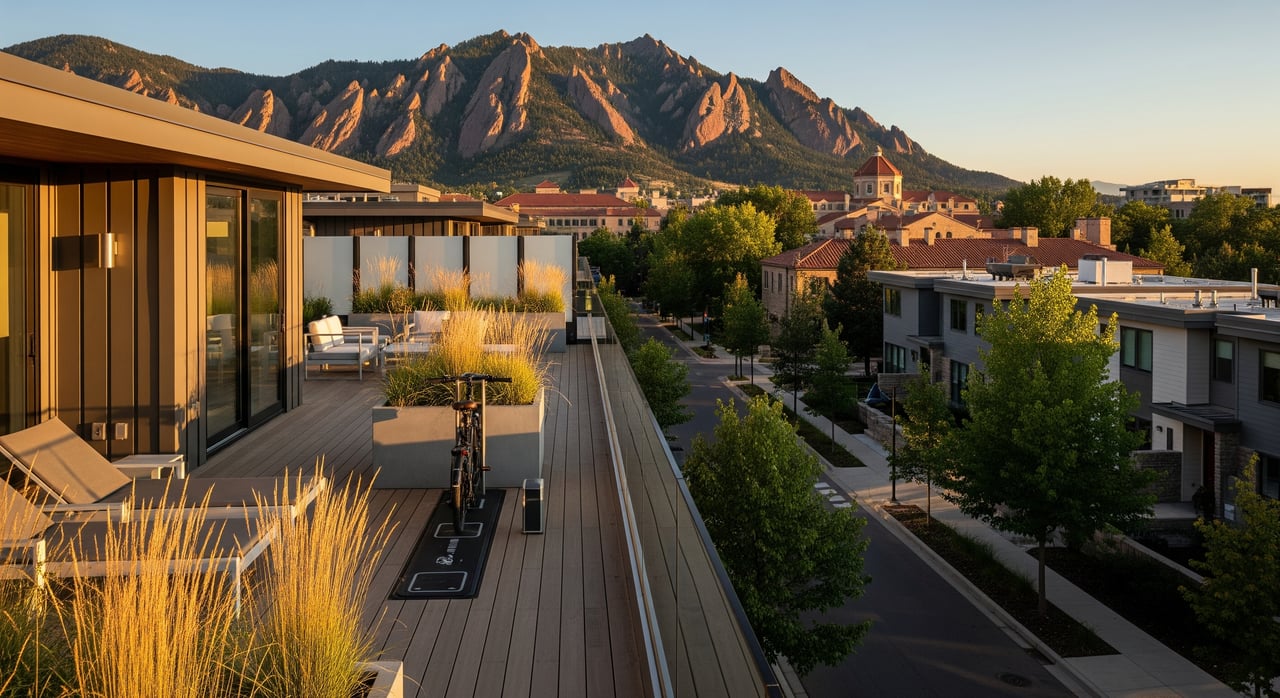
Want to live near CU Boulder without a car? You’re not alone. Many students, faculty, and professionals choose a walkable, bike-friendly lifestyle close to campus and downtown. In this guide, you’ll learn what housing types to expect, how daily life works without a car, the transit and bike options you’ll rely on, and the real trade-offs to consider. Let’s dive in.
What car-free living looks like near CU
CU Boulder and The Hill form the heart of a highly walkable area. You’ll find restaurants, coffee, bookstores, and services clustered within a few blocks of campus. Downtown Boulder, including the Pearl Street area, is a short walk or quick bike ride away for larger grocery runs and city services.
Use simple time rules to plan your days. A 10-minute walk covers about half a mile, and a 15-minute walk is roughly three-quarters of a mile. On a bike, 5 to 10 minutes often covers 0.8 to 2 miles, which puts most errands within easy reach.
Expect four true seasons. Summers are sunny and warm, while winters can be cold with snow and seasonal winds. If you plan to bike or walk year-round, invest in layers, traction, and a backup plan for storm days.
Housing options within walking distance
On-campus housing
University residence halls and apartments offer furnished options, meal-plan access, and unmatched proximity. Contracts typically follow the academic calendar. The trade-off is less privacy and limited control over guests and lease flexibility.
Purpose-built student apartments
Many private complexes near campus and The Hill are designed for students. You’ll see studios to 4-plus-bedroom options, often furnished, with amenities like on-site laundry and utilities packages. They’re convenient and social, but per-bedroom pricing can be higher and turnover can mean more frequent noise.
Older walk-ups and small apartments
Smaller multifamily buildings throughout The Hill and nearby streets can be more affordable than newer buildings. Units are often unfurnished and may have older finishes. Amenities vary by building, and utilities can be less predictable.
Shared houses and conversions
Close-in homes converted to multiple bedrooms or duplexes are common. They can be cost-effective when shared and offer more space. Expect variability in maintenance, energy efficiency, and noise depending on the property and roommates.
Downtown and mixed-use apartments
If you want a quieter, more professional setting, look at mixed-use or downtown buildings. You’ll be close to the Pearl Street corridor, with retail on the ground floor and apartments above. These often command higher rents but deliver an urban lifestyle that still keeps campus close by.
Micro-units and co-living
Smaller private rooms with shared kitchens or baths and flexible terms pop up in central locations. They offer simplicity and social connection for single renters. Availability depends on local rules and building policies.
Cost and timing realities
The proximity premium is real. Units closest to campus and The Hill typically carry higher rent per bedroom. The rental market is seasonal, with many leases tied to August starts. Furnished student-oriented units simplify moving when you don’t have a car, while older rentals are more often unfurnished.
Everyday life without a car
Groceries and essentials
Expect a mix of small markets near campus and larger grocery options downtown or along nearby corridors. Many residents shop more frequently in small batches by foot or bike. Grocery delivery and pickup services can fill the gaps for bulk items.
Dining, coffee, and nightlife
You’ll have dense clusters of restaurants, cafes, bars, and quick-service spots on The Hill and downtown. This makes spontaneous meetups easy without relying on a car. Late-night returns are common, so plan your routes and rides in advance.
Healthcare and pharmacies
Clinics, urgent care, and pharmacies are within a short bike or transit ride of campus. Students also have access to campus health services. For specialized care, check transit or rideshare options to reach providers further away.
Laundry and packages
On-campus facilities, in-building laundry, and neighborhood laundromats are available. Package delivery is common in dense areas, and high parcel volume means secure lockers or staffed package rooms are valuable. Ask about package solutions before you sign a lease.
Storage and bike parking
If you live car-free, storage matters. Look for buildings with secure indoor bike rooms or lockers and extra storage for winter gear or outdoor equipment. Covered, secure bike parking is a key amenity to prioritize.
Noise, safety, and late nights
The Hill is lively and can be noisy, especially around student blocks and nightlife. Choose well-lit, well-traveled routes for evening walks. If you plan frequent late nights, identify your last bus options or build in a rideshare budget.
Getting around: transit and bikes
Buses and campus shuttles
Local and regional bus service runs along key campus corridors, including Broadway, with frequent connections to downtown Boulder. Headways, hours, and route numbers change over time, so confirm current schedules before you depend on them. Students and employees may have access to transit programs; verify eligibility and details through campus channels.
Bike network and paths
Boulder’s bike network includes separated lanes and multi-use paths that make biking a practical daily mode. The Boulder Creek Path is a standout corridor for comfortable east–west travel. With average city speeds, most campus-adjacent errands are a 5 to 15-minute ride.
Bike-share and scooters
Bike-share and other micromobility options have operated near campus and downtown in recent years. Availability, pricing, and station maps vary by operator and season. Check the current system details before you rely on it for commuting.
Occasional car options
Rideshare and taxi services operate in Boulder for trips outside transit coverage or late-night returns. Carshare and rentals can help with big errands, moves, or weekend getaways. If you may get a car later, confirm parking fees or permit rules for your building and neighborhood.
How to choose your location
- Map your daily routine. Identify your most frequent destinations on and off campus.
- Draw 10, 15, and 20-minute walk rings from campus gates you’ll use most.
- Note 5 to 10-minute bike radii for grocery stores, pharmacies, and clinics.
- Prioritize building features that support car-free living: secure bike storage, package lockers, laundry access, and proximity to transit stops.
- Decide your noise tolerance. Closer to The Hill is vibrant; a few blocks away can feel calmer.
- Plan for winter. Look for covered bike parking and nearby transit for storm days.
- Budget for proximity. Expect higher rent closest to campus and more value slightly farther out.
Sample walk and bike times
- The Hill to central campus: roughly a 5 to 10-minute walk depending on your exact block.
- Central campus to downtown Pearl Street: about a 10 to 20-minute walk; 5 to 10 minutes by bike.
- North or South Boulder within 1 to 2 miles of campus: typically a 10 to 15-minute bike ride for daily errands.
These are general ranges. Your exact time depends on your route, lights, and weather.
Pros and cons to weigh
Pros
- Lower transportation costs without fuel, insurance, or parking.
- Easy access to classes, dining, and services on foot or bike.
- A strong walking and biking culture with supportive infrastructure.
Cons
- Higher rents near campus and The Hill.
- Potential noise and turnover in student-heavy areas.
- Winter weather and limited late-night transit in some time bands.
- Carrying limits for bigger errands; plan delivery or carshare when needed.
Work with a local advisor
Choosing the right block in Boulder can make car-free living effortless. If you’re exploring a home purchase near CU or want neighborhood-level guidance on walkability, bike routes, and building amenities, let’s talk. With deep experience in central Boulder micro-markets, I can help you weigh trade-offs, compare buildings, and plan for a low-car lifestyle that fits your routine. Connect with Kimberly Fels to Request a Concierge Consultation.
FAQs
Can I live fully car-free near CU Boulder?
- Yes. With walkable access to campus and The Hill, bike paths, local buses, and delivery services, many residents live comfortably without a car.
Which areas are walkable to campus for most people?
- The Hill and adjacent blocks are the closest, with downtown and central Boulder also within typical 10 to 20-minute walks or 5 to 10-minute bike rides.
Is biking a practical daily option near CU?
- Yes. The bike network and the Boulder Creek Path support short, predictable rides for commuting and errands.
How does seasonality affect renting near campus?
- Leases often start around August, and listings peak mid-summer. Planning early helps with inventory, pricing, and roommate matching.
What building features should I prioritize without a car?
- Look for secure indoor bike storage, package lockers, on-site laundry, and proximity to transit stops and everyday shopping.
Are late-night trips possible without a car?
- Often, yes. Rideshare fills gaps when bus service is limited. Plan your routes and backup options for evenings and weekends.